When a state mandate requires every public meeting to be broadcast — and your IT team is already stretched thin — the technology you choose either makes the job manageable or adds to the pile. For the City of Elkhart, Indiana, the answer came down to one question: can our clerks run this themselves?
A City That Does a Lot of Meetings
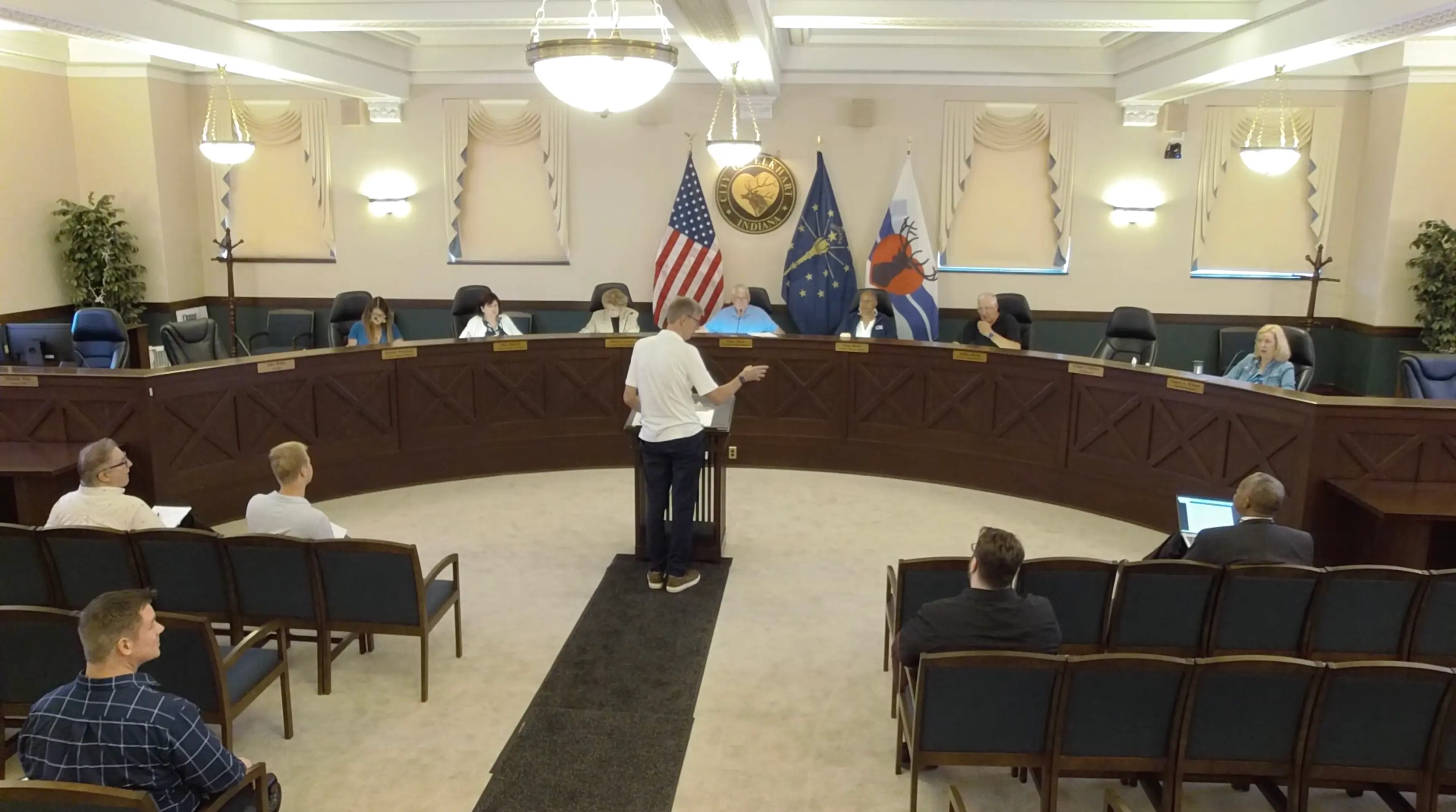
The City of Elkhart is a mid-sized Indiana municipality with a full slate of public-facing government activity: city council sessions, board meetings, committee hearings, and civic events like mayoral addresses. If the public has a right to attend it, the city is obligated to broadcast it.
That’s not a small lift. Elkhart streams three to five times a week on average. Running that volume without a dedicated video production team isn’t just an operational challenge, it’s a daily test of whether your technology actually works in the real world.
Rising to this challenge required a collaborative effort from the IT department. Jim Hines, an IT technician at the city, brought his background in streaming and video production to help develop the system, ensuring it was robust enough for the clerks to manage without technical expertise in the room.
The Mandate That Changed Everything
Elkhart’s streaming story started in 2020. When the COVID-19 pandemic made in-person attendance at council meetings impossible, the city needed a way to let residents watch from home and allow council members to participate remotely.
Then the state of Indiana codified what the pandemic had already made necessary: all public meetings had to be publicly broadcast. Not eventually. Not optionally. It was now the law.
“Anything the public would be allowed to attend in person has to be broadcast by Indiana state law,” Hines explained.
That mandate handed the problem to the IT department. Already managing almost every aspect of the city’s technological infrastructure, the team required a streaming solution that could operate without becoming an additional full-time obligation.
Why Resi
Elkhart evaluated multiple options before landing on Resi. The technical comparison wasn’t close — a competing encoder arrived for testing without basic connectivity that the city’s setup required. But beyond the hardware, what tipped the decision was the interface.
The clerks who run Elkhart’s board and committee meetings aren’t video engineers. They needed to be able to schedule a stream, show up when the meeting started, and have it go live without troubleshooting. Resi’s scheduling tools made that possible.
“We tried to put the clerks of the boards in charge of handling their streaming,” Hines said. “The fact that Resi has a very simple interface to create the streams for those meetings — that was one of the main reasons we said, ‘Yeah, this is what we need.’”
Indiana requires two weeks’ public notice before any government meeting, which means Elkhart’s clerks are scheduling streams well in advance. They log into Resi’s web interface, create the meeting, and when the time comes, the stream goes live automatically. Technical staff is not required.
One Feed, Multiple Destinations
Elkhart’s production setup connects a video switcher to a Resi encoder, which handles the camera-switched feed from council chambers. From there, Resi distributes that single stream to the destinations the city needs: the city’s public webpage and YouTube channel.
The city recently added a Resi Mini encoder to complement their primary setup — giving them the flexibility to take the operation on the road. The mayor’s State of the City address, held at a venue outside council chambers, is one example of where that portability pays off.
“We can just hook that into our portable gear and still be able to live stream wherever the city wants it,” Hines said.
Most of what Elkhart streams, the council chambers are the home base. But when a ribbon cutting or civic event calls for it, the team can pack up and go — same workflow, same destinations, same reliability.
Transparency as Community Connection
The operational case for streaming is compliance. The civic case is something more.
Hines has watched the city’s live broadcasts become a genuine channel for community engagement. Residents who aren’t attending meetings in person are watching online — and responding publicly.
“It creates more community engagement,” he said. “Because as the public is seeing things, even if they’re not participating in the event, they’ll go on different social media sites and talk about what they’ve seen.”
For a local government, that feedback loop matters. Streaming doesn’t just satisfy a legal requirement — it makes the work of governing more visible and more responsive.
What It Comes Down To
The City of Elkhart is doing a high volume of public-facing streaming with a lean team, a non-technical user base, and a legal obligation to get it right every time. Resi’s scheduling automation removes the burden from the people running individual meetings. The web interface gives them confidence without complexity. The multi-destination capability means one production flow reaches every required outlet.
Hines’ endorsement is matter-of-fact, which is exactly what you’d expect from a city IT department: “To sum it up, Resi is not only meeting our needs, but exceeding them. It’s a very simple way to get all of your content wherever it needs to go. You can send your content to multiple places with one stream and not have to worry about it.”
For a government office with nearly 200 streams a year and a staff that has more pressing things to manage, not having to worry about it is exactly the point.
Jim Hines is an IT Technician at the City of Elkhart, Indiana, where Resi powers the city’s mandatory public meeting broadcasts across its website and YouTube channel.