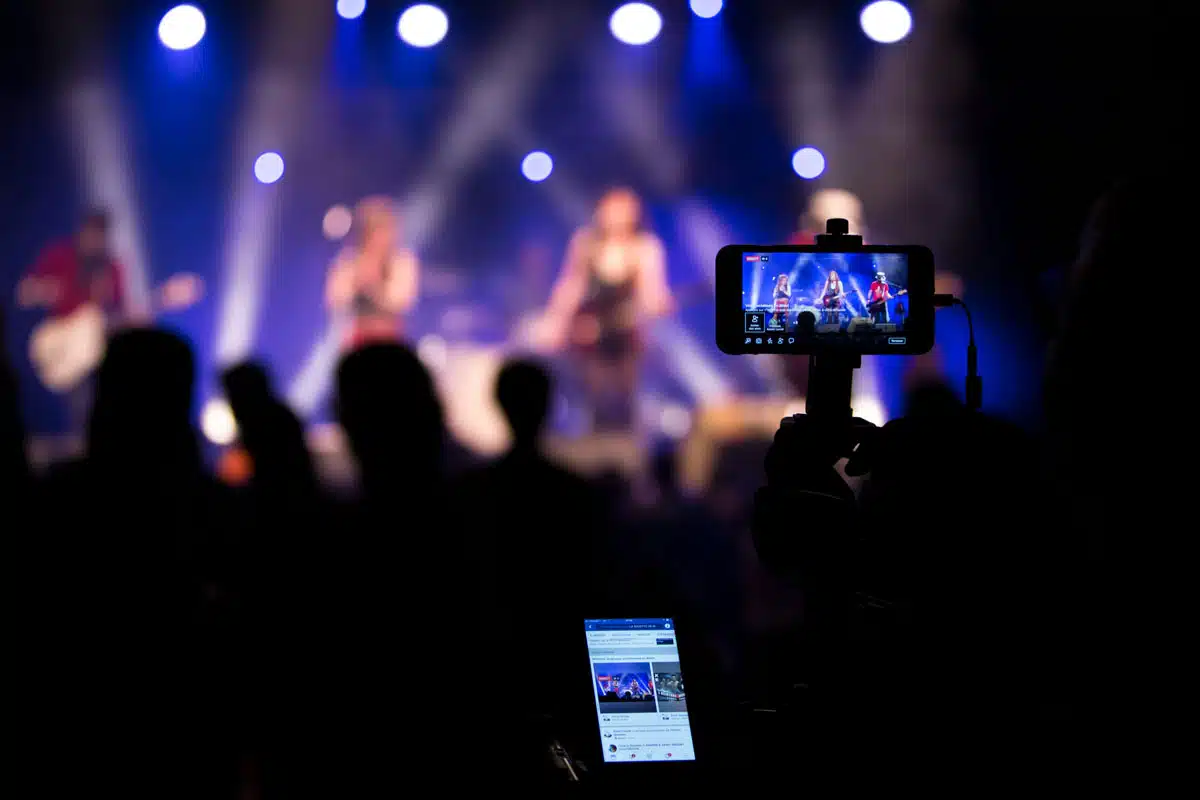
Live streaming has changed what a music venue can be. The room holds a few hundred people. The stream can reach thousands — fans who couldn’t get tickets, people watching from other cities, audiences in other countries who’ve never heard of the venue but are about to become regulars. For artists building their following and venues building their brand, that’s a meaningful opportunity.
Most venues that attempt concert live streaming underestimate how different it is from simply pointing a camera at the stage. Shooting a live performance for a stream is a production discipline in its own right. Audio, lighting, network infrastructure, and production quality behave differently when the stream is the product — not a secondary byproduct of an event happening in the room. Fans watching remotely have one experience: the stream. If it’s good, they come back. If it’s not, they don’t.
What separates a professional concert stream from a shaky Facebook Live comes down to a few decisions made well before showtime.
Why Audio Is the First Thing to Get Right When Live Streaming a Concert
In concert live streaming, audio isn’t secondary to video. It’s the whole experience. Remote viewers are there for the music. A stream with mediocre video but clean, balanced sound holds an audience. A stream with great video and distorted, tinny, or muddy audio loses them fast — regardless of what’s happening on stage.
The most common mistake venues make is tapping the house mix and routing it directly to the stream encoder. This seems logical — the house mix sounds good in the room, so it should sound good in the stream. But the house mix is designed for a room, not for headphones or laptop speakers. Low frequencies that fill a venue with warmth can become boomy or distorted in a stream. The reverb that gives a live performance energy in person sounds like echo interference over earbuds.
The solution is a dedicated stream mix — or at minimum, a stereo bus configured specifically for the stream output — that accounts for how the audio will be heard by remote viewers rather than in-room listeners. This doesn’t require a second engineer or a major infrastructure change. It requires understanding the difference between in-room and in-ear listening environments and making a few deliberate adjustments during soundcheck.
What Equipment Your Venue Actually Needs to Start Live Streaming
A venue doesn’t need a broadcast truck to stream concerts professionally. But it does need more than a phone on a tripod.
The core setup requires a few things: a dedicated hardware encoder, a wired internet connection that’s separate from the venue’s guest Wi-Fi, one or more cameras positioned for good stage coverage, and a streaming platform that handles distribution, archiving, and on-demand hosting without requiring the venue team to manage multiple tools.
For the encoder, Resi’s hardware encoder lineup — including the Mini encoder for venues that need a compact and portable setup — gives venues the combination of broadcast-grade reliability and straightforward operation that a live performance demands. The encoder is the link between the camera feed and the stream, and it’s not the place to cut corners.
For cameras, a single well-placed camera with good framing beats multiple cameras with poor angles every time. A wide shot that covers the stage cleanly, positioned where it won’t be blocked by crowd movement, is the right starting point. Multi-camera production can come later as the streaming operation matures.
The network point deserves particular emphasis. Concert venues are challenging network environments. During a show, hundreds of phones are pulling bandwidth on the Wi-Fi. The streaming setup needs its own dedicated wired connection — separate from whatever the guests are using — to avoid competing for bandwidth at the worst possible moment.
Matching Your Setup to Your Venue Size and Show Frequency
A venue streaming one show a month has meaningfully different needs than one streaming three nights a week. The right equipment choices, staffing models, and platform features should scale with how often the venue streams — not with how ambitious the operation eventually hopes to become.
The right starting point is a reliable, repeatable setup that one person can operate confidently. That means a clear encoder configuration, a dialed-in stream mix, and a streaming platform that handles distribution automatically rather than requiring manual intervention during the show. Once the team is comfortable running that baseline, adding complexity — a second camera angle, lower-third graphics, instant replay clips — becomes manageable rather than overwhelming.
Why Reliability Matters More Than Production Value When You Go Live
The temptation in concert streaming is to prioritize production value: better cameras, more angles, professional graphics, polished transitions. These things matter, eventually. But they don’t matter more than reliability.
A concert stream with three camera angles and slick production that buffers during the set break will lose more viewers than a clean single-camera stream that runs without a single interruption. Remote concert viewers are there for the performance. They’ll stay through average visuals. They won’t stay through buffering wheels, audio dropouts, or a frozen screen during the final song.
Resi’s Resilient Streaming Protocol addresses this directly. RSP keeps the stream intact during internet disruptions at the venue — if the connection dips during a show, viewers don’t see a buffering indicator, the audio doesn’t cut out, and the recording doesn’t have a gap. For a venue where the stream is the product, not just a bonus, that level of reliability isn’t a premium feature. It’s the baseline.
Resi On Demand handles what happens after the show. Every streamed performance is automatically archived, ready for the venue to offer as a replay, sell as a ticket for fans who missed the live event, or use as promotional footage for upcoming shows and artist partnerships. The archive builds itself without anyone on the team manually downloading and re-uploading files.
For venues exploring broader live event streaming strategies, Resi’s to multi-destination streaming pushes a concert stream to multiple platforms simultaneously without sacrificing quality or reliability. And for venues that want to build a branded destination for their archived concert footage rather than hosting everything on YouTube, Media Sites gives venues full control over their content environment — no ads, no suggested competitor content, no algorithm deciding what fans see next.
The audience watching online is real. Their experience matters. Building the infrastructure to serve them well is what turns a one-time stream into a sustainable part of how a venue operates.
Book a demo to see how Resi handles live event streaming for music venues.